


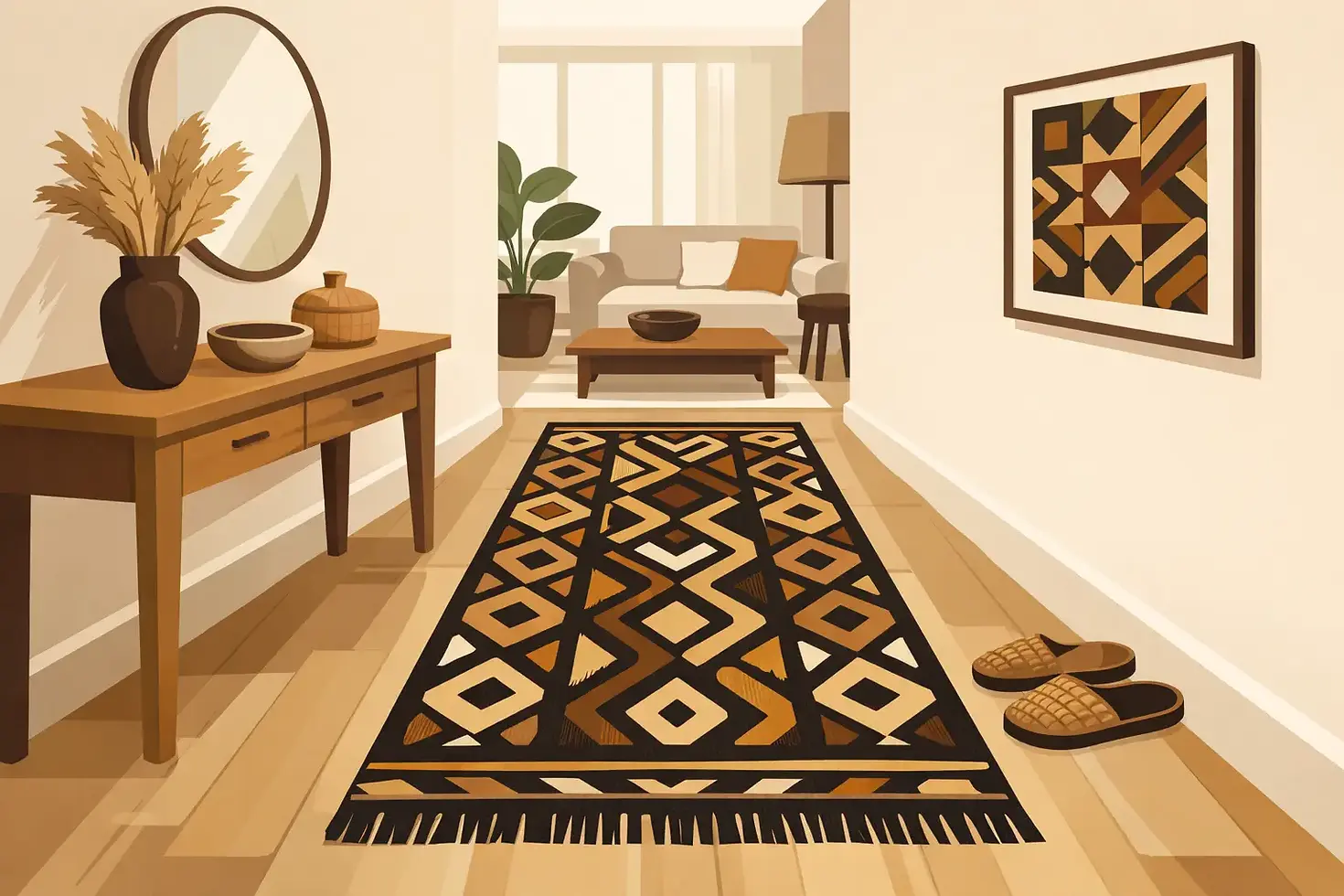
How to Style Kuba Runners at Home
- Jun 18
- 6 min read
A Kuba runner can change a room faster than almost anything else. Lay one across a console, dining table, or bed, and suddenly the space feels more collected, more personal, and far less generic. If you have been wondering how to style kuba runners, the answer starts with treating them as more than fabric. They are handwoven expressions of Congolese artistry, full of movement, texture, and history.
That is what makes styling them so satisfying. A Kuba runner does not need much help to stand out, but it does need the right setting. The best rooms let its pattern breathe while still giving it something meaningful to play against, whether that is warm wood, smooth stone, soft linen, or a piece of sculpture with presence.
How to style kuba runners without losing their impact
The easiest mistake is overdecorating around them. Kuba textiles already carry bold geometry, rich rhythm, and a handmade irregularity that gives them life. If every nearby object is equally loud, the runner can disappear into the noise.
Start by letting the runner be one of the focal points in the room. That might mean clearing visual clutter from the surface beneath it or choosing only one or two objects to layer on top. A carved bowl, a stack of art books, or a ceramic vessel can work beautifully. Five small accessories usually will not.
Scale matters too. A narrow Kuba runner on a long dining table feels intentional and elegant. The same textile bunched on a too-small side table can feel accidental. Before styling, look at the proportions of the surface and decide whether you want the runner to drape slightly, sit cleanly within the edges, or anchor a centered display.
Color is another part of the balance. Many Kuba runners feature earthy neutrals such as brown, black, cream, rust, and muted tan. Those tones are easy to live with, but that does not mean they fade into the background. They shine best when paired with materials that echo their natural depth, such as walnut, oak, ebony-toned finishes, leather, clay, and matte metals.
Use kuba runners where texture matters most
Kuba runners are especially strong in places that need softness and story. A console table in an entryway often looks flat without a textile, and a Kuba runner solves that instantly. It welcomes people into the home with pattern and heritage, while giving everyday objects like trays, keys, and candles a more intentional setting.
On a dining table, a Kuba runner creates a striking center line without feeling overly formal. It brings warmth to wood tables and contrast to glass or polished stone. If your dining space already has a lot happening, keep the tablescape restrained. Low ceramics, natural greenery, or simple serving pieces are usually enough.
A bedroom is another beautiful place to use one. Try a Kuba runner across the foot of the bed for a layer that feels tactile and collected. This works especially well with solid bedding in ivory, sand, charcoal, or terracotta. If your duvet already has a busy print, it depends on the scale. Smaller, quieter bedding patterns can coexist, but two strong geometric statements often compete.
You can also style one on a coffee table, especially if the table is large and grounded. In that setting, the runner adds softness to hard surfaces and helps frame a few meaningful objects. Keep the top arrangement sculptural rather than crowded so the textile remains visible.
How to style kuba runners with modern furniture
Modern interiors can sometimes feel a little too clean, especially when every surface is smooth and every line is sharp. Kuba runners bring relief. Their handwoven texture adds irregular beauty, which is often exactly what a modern room needs.
With minimalist furniture, contrast is your friend. A Kuba runner on a sleek black console or pale oak dining table creates tension in the best way. The room still feels refined, but now it has a pulse. This is where African textiles do some of their strongest work - not by matching the furniture, but by warming it.
If your room leans mid-century, the pairing is even easier. The organic geometry of Kuba cloth sits naturally with low wood profiles, sculptural chairs, and earthy color palettes. In these spaces, you do not need to force a theme. A runner can simply be part of the room's visual language.
For contemporary homes with white walls and neutral upholstery, Kuba textiles often become the detail that makes the room memorable. They add soul without requiring a full redesign. Even one runner on the right surface can shift the mood from staged to lived-in.
Pairing kuba runners with other African decor
This is where styling becomes deeply personal. If you collect African decor, a Kuba runner can connect those pieces and give them a shared foundation. It looks especially strong with carved wood objects, woven baskets, malachite accents, hand-thrown pottery, and pillows in related earth tones.
The key is to mix materials, not duplicate patterns everywhere. If you already have Kuba pillows in the room, think about how the runner can complement rather than repeat them. Maybe the pillow carries the strongest pattern while the runner brings a quieter rhythm. Maybe the runner grounds a tabletop while the pillow softens a chair across the room. Repetition can be beautiful, but too much of the same motif in one zone can flatten the effect.
Try to spread visual weight around the room. If your runner sits on a console, place a substantial object above or beside it, such as a framed textile, a mirror with character, or a sculptural piece in ebony wood. That creates a fuller story and helps the textile feel integrated, not dropped in as an afterthought.
Beauty From Africa often centers this exact relationship between object and story - a handmade textile beside natural stone, carved wood, or another heritage-rich accent. When materials speak to one another, the room feels layered and true.
Let the handmade character lead
Part of the beauty of Kuba cloth is that it is not machine-perfect. Its texture can be slightly uneven. Its geometry can shift in ways that feel human. Those details are not flaws to hide. They are the reason the piece has presence.
So when styling your runner, avoid making everything around it too stiff or over-arranged. Perfectly symmetrical décor can sometimes fight against handmade textiles. A more relaxed arrangement usually feels better. Let one side breathe a little more. Allow a vessel to sit off-center. Keep the scene polished, but not precious.
This also means being thoughtful about surfaces. Kuba runners look best where they can lie relatively flat and be appreciated up close. They are decorative textiles first, so high-traffic or spill-heavy areas may not always be ideal. If you love the look on a dining table but host frequent messy family meals, consider reserving it for special gatherings or moving it to a console where it can stay beautiful with less wear.
Styling by room mood, not just room type
Sometimes the best way to decide how to style kuba runners is to think less about the furniture category and more about the feeling you want.
If you want the room to feel calm, pair the runner with quiet solids and natural materials. Keep the palette close - cream, clay, wood brown, black. Let texture do the work.
If you want the room to feel dramatic, place the runner against darker finishes or under a bold object with sculptural shape. The contrast will sharpen the textile's pattern and make it read almost like art.
If you want the room to feel collected and worldly, mix the runner with a few objects that carry visible handcraft. That might be a carved figure, a stone box, or a woven basket. The trick is restraint. Collected should still feel edited.
A few common styling mistakes to avoid
One is using the runner as filler. Kuba textiles are too distinctive for that. If you place one in a room, give it a reason to be there.
Another is ignoring the surrounding palette. Even earthy textiles can feel disconnected if every nearby color is icy gray or highly saturated jewel tone. That does not mean they cannot work together, but the transition needs thought. Add a bridging material like wood, leather, or black ceramic to tie everything together.
The last mistake is treating heritage textiles like trend pieces. Kuba runners have visual impact, yes, but they also carry cultural significance. Styling them with care means appreciating both their beauty and their origin.
A well-placed Kuba runner does more than decorate a surface. It brings handwoven history into daily view, adding warmth, artistry, and a sense of connection that mass-produced décor rarely gives. Start with one meaningful placement, let the texture speak, and let the room grow around it.


Comments